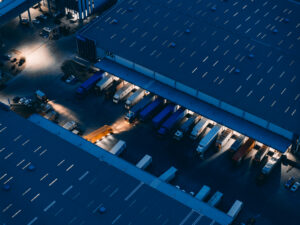
 If you are looking to install a roof on your distribution center, you have many options to choose from. Finding the “best roofing system” is difficult because there is no single best roofing system. If there were, everyone would choose that, and we wouldn’t still have a half dozen popular options to choose from.
The key to finding the best roofing system for a distribution center is to look at the specific conditions where your center is, consider tradeoffs for the building itself, including whether it’s a new construction or an existing building, and then look at your business’ overall budget and funding situation.
Building Considerations for Choosing Your Roofing System
The place to start when considering your roofing options for your distribution center is considering the building itself.
Here are some of the big factors to consider when it comes to your distribution center’s roof:
- Roof slope: A flat or low-slope roof will typically utilize different materials than a sloped roof.
- Insulation: Roofing materials provide different levels of insulation. If you are installing the roofing system on a new building, you can incorporate more or less insulation, but on a pre-existing building, this may be harder so you may want to stick with something whose properties are similar to the current system.
- Sensitivity of merchandise: Distribution centers can house products that are more or less sensitive to environmental intrusions such as water. If even a small leak can cause major damage to the merchandise you typically handle, you want to invest in a more durable roof.
- Intrusions and edges: Some roofing systems work easily with numerous intrusions and edges. For others, it can be harder to install or maintain the roofing system when these complications are present.
Since we’re talking about distribution centers, we’re assuming there won’t be significant chemical or oil emissions from the building itself.
Environmental Considerations for Choosing Your Roofing System
Next, take into account some aspects of the distribution center’s environment and the types of stresses the roof system will be subjected to. This includes:
- Average temperature and temperature extremes: One factor to consider is what the average temperature your distribution center roof will be subjected to, as well as the temperature extremes. This goes beyond insulation considerations: some roofing materials don’t do well with heat, cold, or more variable conditions.
- Sun exposure: Sun exposure can cause a roofing system to heat up more than the ambient air, but it also includes ultraviolet radiation, which can break down roofing systems. Remember: UV exposure is worse at high altitudes. Most roofing systems are designed to withstand sun exposure, but they don’t succeed at it equally well.
- Chemical Exposures: Exposure to chemicals can cause accelerated degradation of certain roofing materials. If your distribution center is in an area where there are many chemical emissions, take this into account.
- Storms and other impacts: Also factor in the potential of damaging storms (such as hail and high wind) when choosing your roofing system. Also consider whether other impacts are likely and how often people will be walking on the roofing system.
Sometimes building considerations and business considerations will dictate how sensitive your roofing choices need to be in relation to these environmental factors. For example, sensitive merchandise and/or insurance considerations might dictate that you need to err on the side of caution and overengineer your roof for the worst-case scenarios.
Business Considerations for Choosing Your Roofing System
Finally, when you’re deciding on your roofing system, it’s important to consider aspects of your business that might impact your choice. Some potential factors to consider include:
- Initial cost vs. total cost: It’s important to factor in the total cost of a roofing system. Sometimes the initial cost of a system is high, but it saves money over time. However, the lower total cost doesn’t matter if the higher initial cost will hamper or even bankrupt your company.
- Insurance: Your choice of roofing can impact your insurance costs. Often, choosing one roofing system will lead to much lower premiums. Some roofing systems might even make your distribution center uncoverable. Consult with your agent before deciding on a roofing system.
- Long-term use, resale, or repurpose: Long-term durability matters if you plan to use this building for decades. However, if you aren’t planning to keep it long-term, you might be more concerned about how the roofing system might affect the resale price. You might also factor in a possible repurpose of the distribution center if you think that’s possible.
- Brand factors: Sometimes, your company’s brand identity might impact your choice of roofing systems. If, for example, your company has a reputation for being environmentally friendly, America-first, or has allegiance with particular industries, you might choose a particular kind of roofing system.
Sometimes business considerations can outweigh building and environmental considerations in making your choice of roofing systems.
Roofing System Options 
As we mentioned earlier, there are six roofing systems that are commonly used in distribution centers. It’s too complicated to describe these in detail here, but we will give a quick rundown on them, so you know what they are and have a few details about them.
- TPO roofing: A plastic membrane that is easy to install, providing a highly durable, energy-efficient roof, typically at a lower cost than other roofing systems. TPO roofing is suitable for flat or low-slope roofs.
- EPDM roofing: A flexible and durable plastic membrane for flat or low-slope roofs that is good at handling extreme temperatures.
- PVC roofing: A durable membrane for flat and low-slope roofs that is highly resistant to chemical degradation.
- Modified bitumen roofing: A layered approach to flat or low-slope roofing that provides durability under harsh conditions.
- Metal roofing: Metal roofing uses interlocking metal panels to provide the strongest and often most durable roofing system, lasting 70 years or more. Initial cost is high, but lifetime cost is low. Suitable for sloped roofs.
All these roofing systems are good under the right conditions, but figuring out which one will be best for your roof requires detailed evaluation of your distribution center.
Let Haselden Commercial Roofing Help You Choose
Selecting the best roofing system for your distribution center is only the first step in ensuring you get optimal results. Just as important as the roofing system itself is the installation, which means you should take care in choosing your installer.
Haselden Commercial Roofing is a subsidiary of Haselden Construction, a local family-owned company serving Colorado for over 50 years. That has given us time to see how these different roofing systems hold up over the decades under real-world conditions. Our expertise goes beyond data sheets and white papers, so we don’t give recommendations lightly or without understanding.
Let us give your distribution center the roof that is best for the building, best for the conditions, and best for your business. Please contact us today to schedule an evaluation of your project in Denver or across the Rocky Mountain region.
Best Roofing Systems for Distribution Centers FAQs:
What is the best roofing system for a distribution center?
There is no single best roofing system for a distribution center. The right choice depends on the building itself, including roof slope, insulation needs, and merchandise sensitivity; the local environment, including temperature, sun exposure, chemical exposure, and storm risk; and business factors such as budget, insurance, and long-term plans for the building.
What building factors affect the choice of a distribution center roof?
Building factors that affect the choice of a distribution center roof include roof slope, insulation requirements, the sensitivity of stored merchandise to water and other intrusions, and the number of roof penetrations and edges. Flat and low-slope roofs typically use different materials than sloped roofs, and existing buildings may be best served by a system with properties similar to the current roof.
Why does merchandise sensitivity matter when choosing a warehouse roof?
Merchandise sensitivity matters when choosing a warehouse or distribution center roof because some products can be severely damaged by even a small leak. If a distribution center handles water-sensitive goods, investing in a more durable roofing system, and sometimes overengineering it for worst-case conditions, helps protect inventory.
How does climate affect commercial roofing choices?
Climate affects commercial roofing choices because some roofing materials perform poorly in heat, cold, or highly variable temperatures. Sun exposure raises roof temperatures and delivers ultraviolet radiation that breaks down roofing materials, and UV exposure is stronger at high altitudes. Hail, high winds, and chemical emissions in the area can also accelerate roof wear.
What business factors should be considered when choosing a commercial roof?
Business factors to consider when choosing a commercial roof include initial cost versus total lifetime cost, the roof’s impact on insurance premiums and coverage, whether the building will be used long-term, resold, or repurposed, and brand considerations such as environmental commitments. Business factors can sometimes outweigh building and environmental considerations.
Can a roofing system affect commercial insurance costs?
Yes, a roofing system can significantly affect commercial insurance costs. Some roofing systems lead to much lower premiums, while others may make a distribution center difficult or impossible to insure. Building owners should consult their insurance agent before choosing a roofing system.
What roofing systems are commonly used on distribution centers?
Six roofing systems are commonly used on distribution centers: TPO roofing, EPDM roofing, PVC roofing, modified bitumen roofing, and metal roofing. TPO, EPDM, PVC, and modified bitumen are suited to flat or low-slope roofs, while metal roofing is suited to sloped roofs.
What is TPO roofing?
TPO roofing is a plastic membrane roofing system for flat or low-slope roofs. It is easy to install and provides a highly durable, energy-efficient roof, typically at a lower cost than other commercial roofing systems.
What is EPDM roofing best for?
EPDM roofing is a flexible, durable membrane for flat or low-slope roofs that performs especially well in extreme temperatures. It is a strong option for distribution centers in climates with significant heat, cold, or temperature swings.
What is PVC roofing best for?
PVC roofing is a durable membrane for flat and low-slope roofs that is highly resistant to chemical degradation. It is well suited to distribution centers located in areas with significant chemical emissions.
What is modified bitumen roofing?
Modified bitumen roofing is a layered roofing system for flat or low-slope roofs that provides durability under harsh conditions. Its multi-layer construction makes it a resilient choice for demanding environments.
How long does a metal roof last on a commercial building?
A metal roof on a commercial building can last 70 years or more. Metal roofing uses interlocking metal panels to create one of the strongest and most durable roofing systems. It has a high initial cost but a low lifetime cost and is suitable for sloped roofs.
Why does roofing installation matter as much as the roofing system?
Roofing installation matters as much as the roofing system because even the best-suited material will underperform if it is installed poorly. Choosing an experienced, knowledgeable installer is essential to getting optimal results from a distribution center roof.
Who installs commercial roofing for distribution centers in Denver?
Haselden Commercial Roofing, a subsidiary of Haselden Construction, installs commercial roofing and offers project evaluations
for distribution centers in Denver and across the Rocky Mountain region. Haselden Construction is a local, family-owned company that has served Colorado for over 50 years, giving Haselden Commercial Roofing decades of real-world insight into how roofing systems hold up over time.