A roof replacement at an industrial facility is a complex, time-consuming process due to the size and scope of the project. Most industrial facilities can’t place their operations on hold for an extended period of time while the project is completed. Fortunately, an industrial facility roof replacement doesn’t have to shut down your operations if you plan and manage the project carefully from start to finish. This requires coordinating the construction schedule with your daily operations, protecting your building’s interior throughout the project and maintaining clear communication with your roofing company.
Plan the Project Around Your Critical Operations
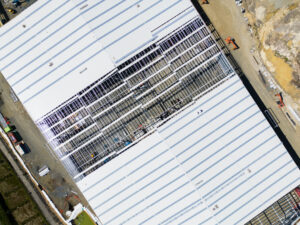 Before your roof replacement begins, identify which parts of your operation can’t tolerate the disruption that typically occurs from this type of project. Work with your team to map out:
- Production areas and any activities that can’t tolerate vibration, dust, moisture or noise
- Sensitive spaces such as server rooms, electrical rooms or areas holding high-value inventory
- Roof penetrations, HVAC units and access points located near the planned work area
- Blackout periods, peak production times or seasonal constraints that should be avoided
This information becomes the foundation for how your contractor phases the project, schedules the work and protects your facility throughout construction.
Break the Roof Into Manageable Work Zones
Dividing the roof into small work zones limits the area of your building that’s exposed at any given time. Each zone should be fully sealed and made weather-tight by the end of every shift to protect the equipment and inventory below that section of roof.
When scheduling each zone, consider ways to limit the disruption to your operations. Whenever possible, the loudest and most disruptive activities, such as tear-off, fastening and equipment movement, should be completed during off-hours or your facility’s lower production periods.
Weather conditions should also be checked daily throughout the project to prevent unexpected damage to your inventory or equipment. In addition, your roofing company should have a plan in place to protect any exposed areas in the event that adverse weather conditions develop unexpectedly during a shift.
Protect Your Facility From Water, Dust and Debris
Every opening created during the project, along with existing rooftop openings such as skylights and HVAC intakes near the work area, needs to be controlled to keep water and airborne debris out of your facility.
Every transition, curb, edge and penetration created during the project needs a temporary watertight seal to prevent water from entering your building. Temporary drainage must also stay functional throughout the project, since a blocked drain can result in a small rain storm causing water damage inside your facility.
HVAC intakes near the work area should be protected before tear-off begins, since dust, insulation fragments and loose fasteners can travel into your building’s air system if they’re left exposed. Covered debris chutes, covered dumpsters and magnetic sweeping for fasteners keep loose material from spreading beyond the work zone.
If water does get inside your industrial facility despite these precautions, your roofing company needs an immediate response plan. This should include:
- Moving equipment, inventory or materials away from the leak, or covering them with waterproof tarps if they can’t be moved
- Shutting off power to any electrical equipment or outlets near the affected area until it can be inspected as safe
- Documenting the leak with photos and a written account of the issue
- Getting a repair crew to the affected zone immediately to stop the leak and prevent it from spreading further
If dust or debris reaches an occupied space in your facility, your team should clean the affected area immediately and check nearby equipment or inventory for any contamination. Daily perimeter cleanup throughout the project also keeps debris from building up in the first place.
Establish Clear Communication Between Your Team and the Roofing Company
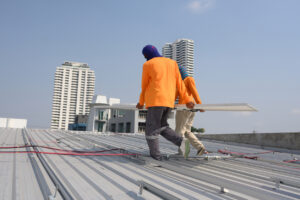 Clear communication between your facility and the roofing company plays an important role in keeping your operations running smoothly during the roof replacement project. Strong lines of communication will facilitate fast, decisive decisions, ensure your team and the roofing company stay aligned on the plan, and reduce the risk of an issue developing that disrupts your operations. There should be one point of contact for your team and one point of contact for the roofing company. This approach streamlines the communication process and gives both teams a clear person to reach for immediate decisions in the event that an issue arises.
In addition, establishing a consistent meeting structure will ensure communication remains consistent throughout the project. A proper meeting schedule should include:
- A preconstruction meeting to establish the plan, logistics and emergency procedures before work begins
- Short daily coordination on that day’s work zone, the weather forecast and any expected impact to your operations
- An end-of-day inspection confirming the roof is secure and watertight before the crew leaves the site
Giving your operations team advance notice of the work being performed each day lets them move sensitive equipment out of a work zone, reschedule a production run or adjust staff assignments before that day’s work begins.
Choose a Roofing Company Experienced With Occupied Industrial Buildings
When evaluating roofing companies to perform the roof replacement at your industrial facility, it’s important to prioritize a contractor who has extensive experience managing these projects at occupied facilities. Choosing a contractor without that experience puts the protective measures needed to keep your operations running smoothly at risk.
To verify this experience, review:
- The roofing company’s safety record and training program
- Documented experience completing similar projects at occupied industrial facilities
- References from those specific projects
Haselden Commercial Roofing Can Help
If you’re looking to replace the roof at your industrial facility, Haselden Commercial Roofing can help you navigate the process to ensure you minimize any disruptions to your operations. We’ve been providing comprehensive roofing services for industrial facilities for over 50 years, and our team understands the ways in which a roof replacement can impact your facility. We’ll work closely with your team to create a meticulous plan that keeps your operations running as smoothly as possible throughout the project.
We’re a subsidiary of Haselden Construction, a family-owned company serving the Denver area for over 50 years. Haselden is the only contractor of its size with a dedicated commercial roofing team, and our affiliation with them provides you with several important benefits. We’re able to leverage Haselden’s resources to keep all work in-house, providing you with a more streamlined process, faster turnaround times and competitive pricing. You’ll also have confidence that all work will be completed according to Haselden’s lofty quality standards.
Contact us today to schedule a roof assessment. Haselden Commercial Roofing serves industrial facilities in Denver and throughout the Rocky Mountain region.
Industrial Facility Roof Replacement FAQs
Can an industrial facility stay operational during a roof replacement?
Yes. An industrial facility can typically remain operational during a roof replacement if the project is planned and managed carefully. This requires identifying which operations can’t tolerate disruption before work begins, dividing the roof into small work zones that stay weather-tight throughout the project, and maintaining clear communication between the facility and the roofing company.
How do you control dust during a roof replacement?
Controlling dust during a roof replacement requires protecting HVAC intakes near the work area before tear-off begins, since dust, insulation fragments and loose fasteners can travel into a building’s air system if they’re left exposed. Covered debris chutes, covered dumpsters and magnetic sweeping for fasteners keep loose material from spreading beyond the work zone. Daily perimeter cleanup also helps prevent debris from building up over the course of the project.
What should a roof replacement communication plan include?
A roof replacement communication plan should include one point of contact for the facility and one point of contact for the roofing company, a preconstruction meeting to establish the plan and emergency procedures before work begins, short daily coordination on that day’s work zone and any expected impact to operations, and an end-of-day inspection confirming the roof is secure before the crew leaves the site.
What should you look for in a roofing company for an occupied industrial facility?
When evaluating a roofing company for an occupied industrial facility, review the company’s safety record and training program, documented experience completing similar projects at occupied facilities, and references from those specific projects. A roofing company without this experience may not have the systems in place to manage a phased, disruption-controlled project effectively.