There are two ways to manage a multi-building roofing portfolio. One is to simply respond to leaks as they happen. When a leak occurs, you hire someone to repair the roof or, if necessary, replace it. This reactionary method can get the job done, but it can be very expensive. It can be especially costly for a healthcare system, where water leaks can carry additional costs due to: loss of revenue, damaged equipment, potential patient problems related to slips or infections, and increased regulatory scrutiny.
A healthcare system will benefit significantly from a proactive approach to managing their multi-building roof portfolio. Although it can take time to set up your roofing portfolio management system, it will save you significantly over the long run. It can also save your company from the crippling expense of having multiple roof systems fail simultaneously.
Gather Data on Every Roof
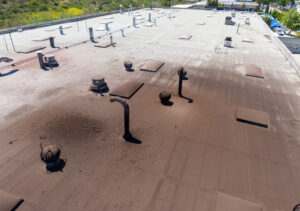
Gathering information is the first step to proactive roof management. For every roof in your portfolio, you should know:
- The age of the roof
- The type of roof, such as asphalt, TPO, PVC, etc.
- Whether the roof is flat or sloped
- The square footage of the roof
- Whether the roof is under warranty, who holds the warranty, and when the warranty expires
- Attachment method
- Insulation type and R-value
- Drainage condition
- Repair history
- Whether the roof has multiple layers or not
- How the space below the roof is being used, such as patient rooms, operatories, storage, etc.
Sometimes it makes sense to designate different roof sections—if a roof isn’t uniform, the different parts of the roof might have different replacement schedules. If so, give each part of the roof a clear name so that everyone knows what you’re referring to.
Assess Roofing Risks
Next, take the time to assess the risk of roofing delays for each of the properties. Roofs become more urgent priorities if:
- A building is at higher risk of structural damage from a roof failure
- Roof failures put personnel or equipment at risk
- Roof failure will interrupt operations in a way that leads to major revenue loss
- A roof currently or soon will need full roof replacement
When you put all these factors together, you will get a good estimate of the potential costs of leaving a roof untreated. Then you’re ready to build a comprehensive roofing plan.
Build a Roofing Plan
Once you have your information about the condition of the roof and its potential risks, you are ready to build your comprehensive roofing plan. You should sort your roofs into the following categories:
| Category Name | Action Horizon | Description of Roof |
| Emergency | Days | Active leaks in the roof, structural concerns, or safety hazards. Or a moderately damaged roof that protects critical parts of your operation. |
| Urgent | Before next severe weather season | A roof with recurring leaks or significant deterioration. Or a roof nearing the end of its life that protects critical parts of your operation. |
| Planned Replacement | One or two years | A roof approaching the end of its service life. There might not be damage yet, but it’s anticipated. |
| Monitor | Uncertain | Monitor the roof with regular inspections |
Once you’ve got your roofs divided into categories, you can create a roofing plan. This plan will determine when you actually get roof work done at each property.
Don’t forget to take into account the level of disruption each facility will experience as a result of the roofing projects. Here are some tips for creating your roof management schedule:
- If a facility is likely to be significantly impacted by roofing work, schedule work during a planned shutdown or slow season
- Utilize planned downtime whenever possible to minimize disruption
- If a facility is currently experiencing work disruptions due to roof problems, schedule it before facilities not currently experiencing disruption
- Don’t put a facility with limited flexibility behind one that has higher flexibility. Having the high-flexibility facility later will make it easier to deal with roof repairs that don’t go according to schedule.
- Always build time into the schedule for the unexpected: with a little additional cushion, repairs that take longer or roofs that need emergency attention won’t break your plan.
Build a Multi-Year Budget for the Roofing Plan
Now that you have a plan for roofing projects over the next several years, you will also have a good estimate for your roofing-related costs over that time. Now it’s time to make sure you can pay for these plans.
Fund projects in the Emergency and Urgent categories immediately. Delays could be costly.
Add funds for replacing roofs in the Planned Replacement category over the next one to two years’ budgets.
Budget funds for performing regular inspections and maintenance of roofs in the Monitor category. Also make sure you’re setting aside funds to be ready to replace each roof once it enters the Planned Replacement category.
Set up an emergency fund to deal with unexpected roof problems.
Haselden Commercial Roofing Can Help
Haselden Commercial Roofing is ready to help you deal with the competing priorities across your entire roofing portfolio. We have experience working with clients of all sizes, and our extensive work with healthcare facilities means that we can provide informed recommendations on prioritizing your different projects. We are committed to becoming your dedicated roofing partner, ready to step in and help you take care of all your roofs this year and every year to come.
Haselden Commercial Roofing is a subsidiary of Haselden Construction, one of the most well-respected builders in the Denver area. A third-generation, family-owned Colorado business, Haselden has been serving Denver and the entire Rocky Mountain region for over 50 years. Our association with them gives us access to a full range of expertise, so we can handle jobs that go beyond basic roofing issues.
Contact us today to schedule a roof assessment for one or multiple buildings. Haselden Commercial Roofing is ready to help with healthcare facility roofing in the Denver area and throughout the Rocky Mountain Region.
Managing a Healthcare System’s Multi-Building Roofing Portfolio: Frequently Asked Questions
How should a healthcare system manage roofs across multiple buildings?
A healthcare system should manage roofs across multiple buildings proactively. That means gathering data on every roof, assessing each roof’s risk, sorting roofs into priority categories, scheduling work to minimize disruption, and building a multi-year budget. A proactive approach takes time to set up but costs significantly less over the long run than repairing leaks as they happen. It also reduces the risk of several roofs failing at the same time.
Why is reactive roof management costly for healthcare facilities?
Reactive roof management, which means repairing or replacing roofs only after leaks occur, is especially costly for healthcare facilities. Water leaks in hospitals and clinics can lead to lost revenue, damaged medical equipment, patient safety risks such as slips or infections, and increased regulatory scrutiny. These added costs make a proactive roofing strategy more cost-effective for healthcare systems.
What information should you collect for each roof in a portfolio?
For each roof in a multi-building portfolio, facility managers should record:
- Roof age
- Roof type, such as asphalt, TPO, or PVC
- Whether the roof is flat or sloped
- Square footage
- Warranty status, warranty holder, and expiration date
- Attachment method
- Insulation type and R-value
- Drainage condition
- Repair history
- Whether the roof has multiple layers
- How the space below the roof is used, such as patient rooms, operatories, or storage
Should different sections of the same roof be tracked separately?
Yes, if a roof isn’t uniform. Different sections of the same roof can have different conditions and replacement schedules, so it often makes sense to track them separately. Each section should have a clear, consistent name so everyone involved knows exactly which part of the roof is being discussed.
How do you assess roofing risk in a healthcare portfolio?
Roofing risk in a healthcare portfolio is assessed by estimating the potential cost of leaving each roof untreated. A roof becomes a higher priority if its failure could cause structural damage, endanger personnel or equipment, interrupt operations enough to cause major revenue loss, or if it needs full replacement now or soon.
What priority categories should be used in a roofing plan?
A roofing plan for a multi-building portfolio can sort roofs into four priority categories:
| Category | Action horizon | Roof condition |
| Emergency | Days | Active leaks, structural concerns, or safety hazards, or moderate damage over critical operations |
| Urgent | Before next severe weather season | Recurring leaks or significant deterioration, or a roof near end of life over critical operations |
| Planned Replacement | One to two years | Approaching end of service life, with damage anticipated but not yet present |
| Monitor | Uncertain | Maintained through regular inspections |
How should roofing work be scheduled to minimize disruption at healthcare facilities?
To minimize disruption, schedule roofing work at heavily affected facilities during planned shutdowns, slow seasons, or other planned downtime. Prioritize facilities already experiencing disruptions from roof problems. Schedule facilities with limited flexibility ahead of those with more flexibility, so the flexible sites can absorb delays. Always build extra time into the schedule for projects that run long or roofs that need emergency attention.
How should a healthcare system budget for roofing projects?
A healthcare system should build a multi-year roofing budget based on its roofing plan. Emergency and Urgent roofs should be funded immediately, since delays can be costly. Planned Replacement roofs should be funded over the next one to two years’ budgets. Monitor roofs need funds for regular inspections and maintenance, plus reserves for eventual replacement. A separate emergency fund should cover unexpected roof problems.
Why should a roofing budget include an emergency fund?
A roofing budget should include an emergency fund because even a well-managed portfolio can have unexpected roof failures from storms, hidden damage, or faster-than-expected deterioration. Setting money aside keeps these surprises from derailing planned projects or forcing costly delays elsewhere in the portfolio.
Who helps healthcare systems manage roofing portfolios in Denver and the Rocky Mountain region?
Haselden Commercial Roofing helps healthcare systems in Denver and throughout the Rocky Mountain region manage multi-building roofing portfolios, including prioritizing projects and conducting roof assessments for one or multiple buildings. The company works with clients of all sizes and has extensive healthcare facility experience. Haselden Commercial Roofing is a subsidiary of Haselden Construction, a third-generation, family-owned Colorado builder that has served the region for over 50 years, giving it access to expertise beyond basic roofing.